SEC FORM 4, DECODED IN PLAIN ENGLISH
Insider trading alerts, straight from the filing
When an officer, director, or 10 percent owner trades their own company's stock, they must report it on SEC Form 4, generally within 2 business days. GetSignal reads every filing as it lands and pushes the ones you care about to your phone.


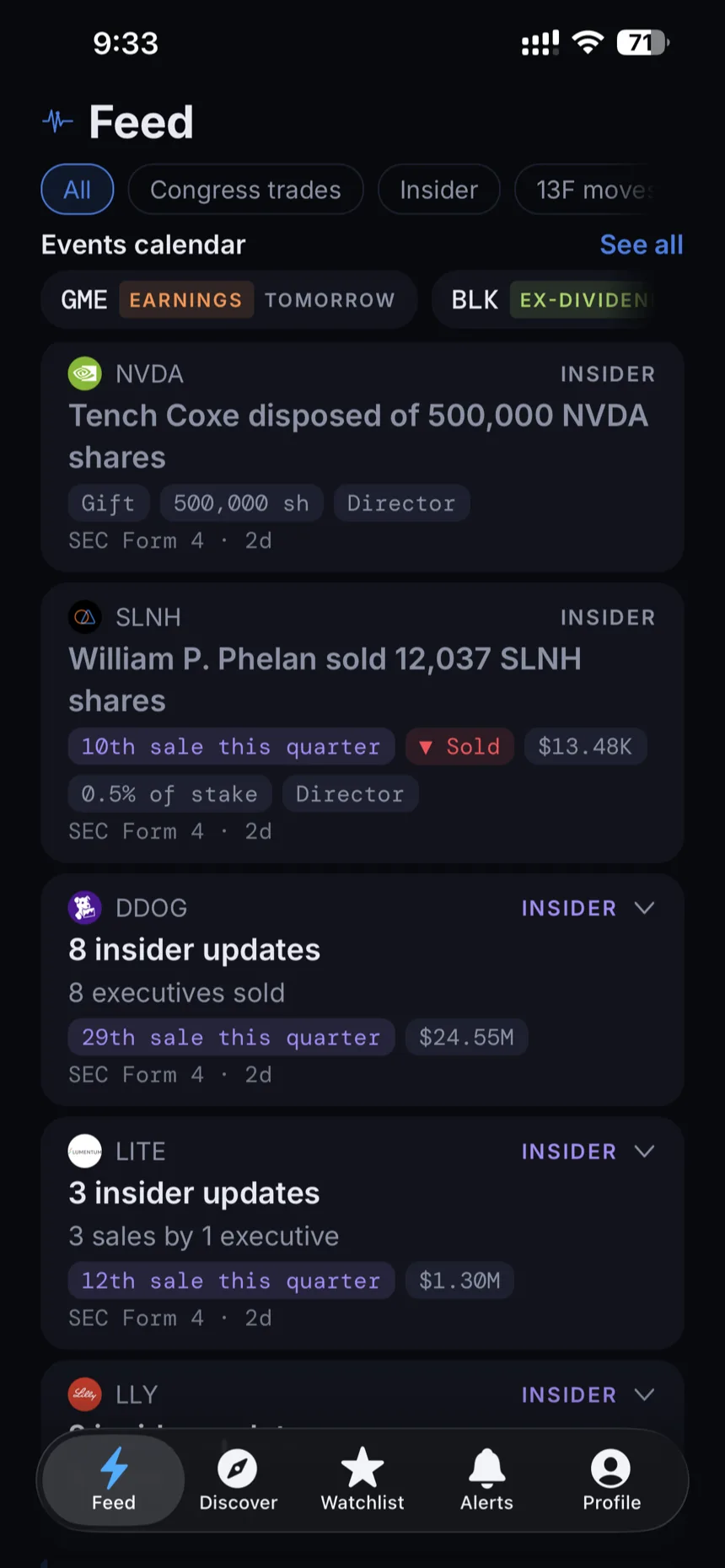
What a Form 4 is, and why two days matters
Form 4 is the document a corporate insider files with the SEC when their ownership in the company changes. Under the securities laws, officers, directors, and shareholders who own more than 10 percent of a company count as insiders, and nearly every purchase, sale, grant, or transfer they make has to go on the public record. The deadline is tight: a Form 4 is generally due within 2 business days of the transaction.
That speed is the whole point. Members of Congress can legally wait up to 45 days to disclose a trade under the STOCK Act, and quarterly 13F filings arrive 45 days after the quarter ends. Against that backdrop, Form 4 is about as close to real time as legally mandated disclosure gets. If you want the fresh signal in the public record, this is where it lives. You can compare the timelines yourself on our Congress trading tracker and 13F tracker pages.
Each filing lists the security, the transaction date, a code for the type of transaction, the share count, the price, and what the insider holds afterward. GetSignal reads every filing as it is published, attaches it to the company profile, and always shows the trade date next to the filing date, so you know exactly how old the information is.
A buy is a choice. A grant is a paycheck.
Every Form 4 line carries a transaction code, and the code is where most insider trackers get sloppy. Code P is an open market purchase: the insider chose to spend their own cash on the stock. Code S is an open market sale. Code M is an option exercise, code A is a grant or award from the company, code F is shares withheld to cover taxes when stock vests, and code G is a gift. Only some of those reflect a decision the insider actively made in the market. The rest are compensation plumbing.
This distinction gets lost constantly. A wave of "insider selling" headlines often turns out to be nothing more than tax withholding on a routine vesting schedule, reported dutifully on Form 4 because the law requires it. Treating that like a conviction sale misreads the filing.
GetSignal decodes 12 transaction codes into plain English and labels every one honestly. Withholding is shown as withholding and is never counted as a sale decision. Grants are shown as grants, exercises as exercises. When you see an open market buy or sale in GetSignal, that is what actually happened, not a relabeled payroll event.
One insider, one story
Insiders rarely trade in a single clean print. A sale of 50,000 shares is often executed as a dozen smaller lots at slightly different prices over the course of a day, all reported together. A tracker that fires one notification per line turns one decision into twelve buzzes, and after a week of that you stop reading any of them.
GetSignal collapses a company's insider filings for the day into a single card in your feed: the number of buys and sells, and the total dollar value across the lots. You read one line, not twelve fragments, and the detail is one tap away when you want it.
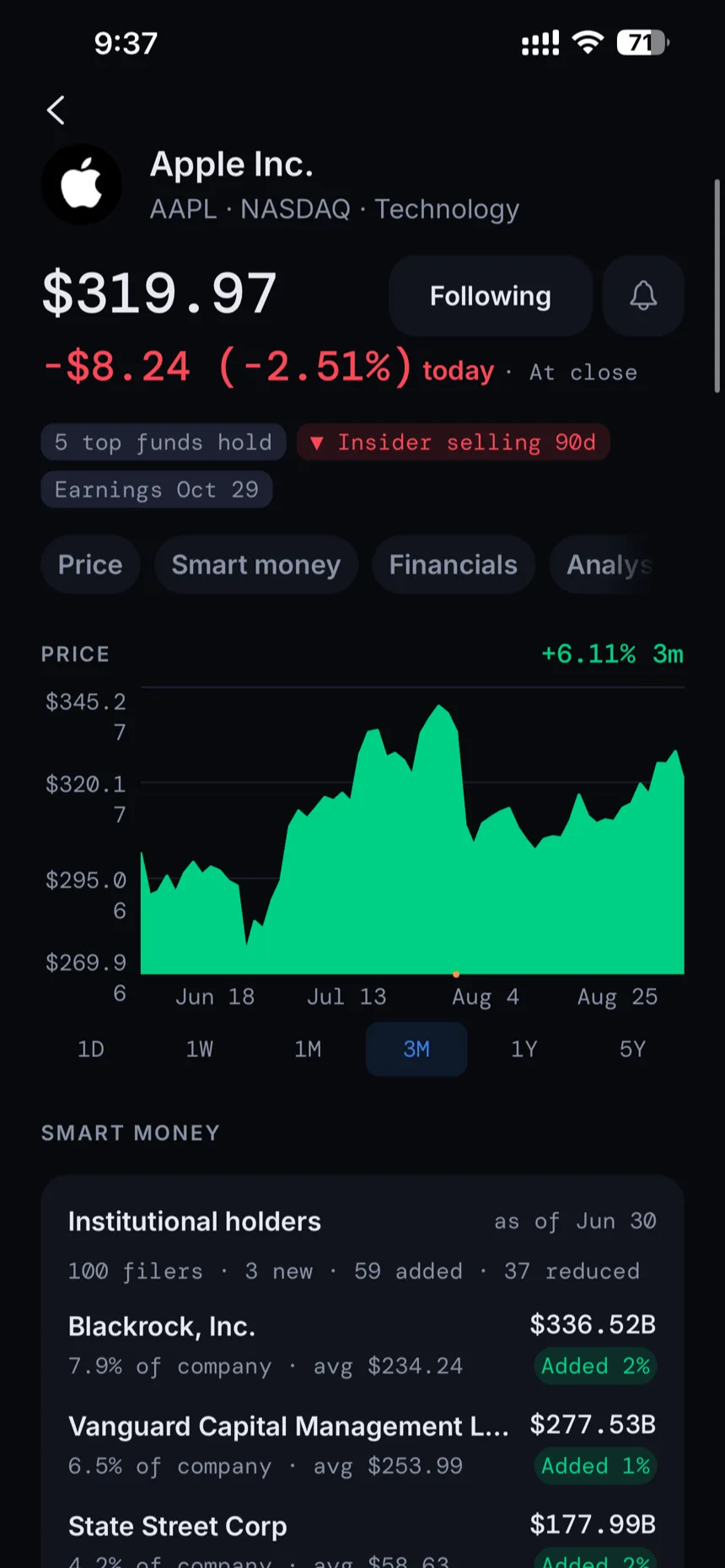
The company profile then supplies the context around the event. Recent insider activity is flagged over a 90 day window, next to the price chart, financials, analyst ratings, and the top 13F holders of the stock. Every event links back to the source filing on SEC EDGAR, and the in-app methodology screen explains where each number comes from. A single Form 4 is a data point. A profile puts it in a sentence.
Alert rules you actually control
Follow a company and you decide what reaches your lock screen. Each alert rule has its own event types, so one company can alert you on insider trades only while another covers earnings and fund moves too. An importance floor with four levels, Routine, Update, Notable, and Major, filters out paperwork. Quiet hours hold notifications overnight, and a daily push cap keeps a busy news day from taking over your phone. Third party news stays out of your feed unless you opt in.
The free plan includes 10 follows, per-event push alerts, and 30 days of history, which is enough to watch the insiders at the handful of companies you care about most. Signal Pro adds unlimited follows, full history, up to 20 alert rules, and price alerts, at $14.99 a month or $119.99 a year with a 7 day free trial. Details are in the pricing section of the home page.
Form 4 tracking, built into every company profile
Insider filings are not a separate silo in GetSignal. They land in your feed, trigger your alert rules, and appear on the profile of every company you follow.
- A push minutes after an insider filing, with per-rule event types
- Honest labels for all 12 transaction codes, withholding never counted as a sale
- Insider buying and selling flagged on company profiles over a 90 day window
- Trade date and filing date shown side by side, with the delay
- Links to the source filing on SEC EDGAR from every event
- Importance floor, quiet hours, and daily caps on every alert rule
Frequently asked questions
Is this the illegal kind of insider trading?
No. The phrase covers two very different things. Trading on material non public information is illegal. But officers, directors, and shareholders who own more than 10 percent of a company are also called insiders, and they buy and sell their own stock legally all the time. When they do, they must report it to the SEC on Form 4, generally within 2 business days. GetSignal tracks those public, legal disclosures.
How fast are the alerts?
A Form 4 is generally due within 2 business days of the transaction, which makes it one of the freshest disclosures in the public record. GetSignal polls for new filings every 5 minutes, around the clock, and pushes an alert as soon as one lands. Every event shows the trade date next to the filing date, so you always know how old the information is.
Does an insider sale mean the stock is in trouble?
GetSignal does not interpret trades or make recommendations. What it does is label each transaction honestly: an open market sale is shown as a sale, while shares withheld to cover taxes on vesting stock are shown as withholding and never counted as a sale decision. You see what actually happened and draw your own conclusions.
Can I limit alerts to the filings that matter?
Yes. Each alert rule has its own event types and an importance floor with four levels: Routine, Update, Notable, and Major. Set the floor to Notable and routine paperwork stays off your lock screen. Quiet hours and a daily push cap are built in, and third party news is off unless you opt in.
Is GetSignal free?
Yes. The free plan includes 10 follows, per-event push alerts, and 30 days of history. Signal Pro adds unlimited follows, full history, up to 20 alert rules, and price alerts for $14.99 a month or $119.99 a year, with a 7 day free trial.
Know what insiders filed, minutes after they file
Free to start. The Pro trial runs through the App Store or Google Play and becomes a paid subscription unless you cancel. Not investment advice.