HEDGE FUND & INSTITUTIONAL HOLDINGS
Track 13F filings from the funds that move markets
Every quarter, big institutional investors must tell the SEC what they hold. GetSignal reads those filings, shows you what changed, and pushes an alert when a fund you follow files. Honestly dated, always linked to the source.


What a 13F filing actually is
Form 13F is a quarterly disclosure that institutional investment managers file with the SEC, listing the US listed equity positions they manage. The filing is due 45 days after the quarter ends, which means the holdings you read in a 13F are a snapshot of last quarter, not a live portfolio. A fund could have trimmed a position, doubled it, or exited entirely between the day the quarter closed and the day the filing became public.
That lag is the most misunderstood thing about 13F data, and plenty of products quietly gloss over it. GetSignal does the opposite. The methodology screen in the app spells out why a 13F reflects last quarter rather than today, every holding is dated to the reporting period it belongs to, and each filing links back to the original document on SEC EDGAR so you can check the primary record yourself.
Read with that caveat in mind, 13Fs are still one of the best public windows into how the largest pools of capital are positioned, and, more usefully, how that positioning shifts from one quarter to the next.
13D and 13G: the faster 5% disclosures
13Fs run on a fixed quarterly clock, but stake disclosures are event driven. When an investor crosses 5% of a company, they must disclose the stake, and which schedule they file tells you a lot about intent. Schedule 13D is due within 5 business days of crossing the threshold and is the activist's form: it signals the buyer may push for board seats, strategy changes, or a sale. Schedule 13G is the shorter form for passive investors, the index funds and managers who crossed 5% with no plans to shake anything up.
Because a 13D lands within days rather than up to a quarter and a half later, it is often the earliest public evidence that a major investor is building a position. In GetSignal, 13D and 13G stake filings appear in the recent SEC filings list on a company profile, each row labeled by schedule and linked to the original document on sec.gov. For the other fast disclosure on the corporate side, insider Form 4 trades, see the insider trading alerts page.
What a fund profile shows in GetSignal
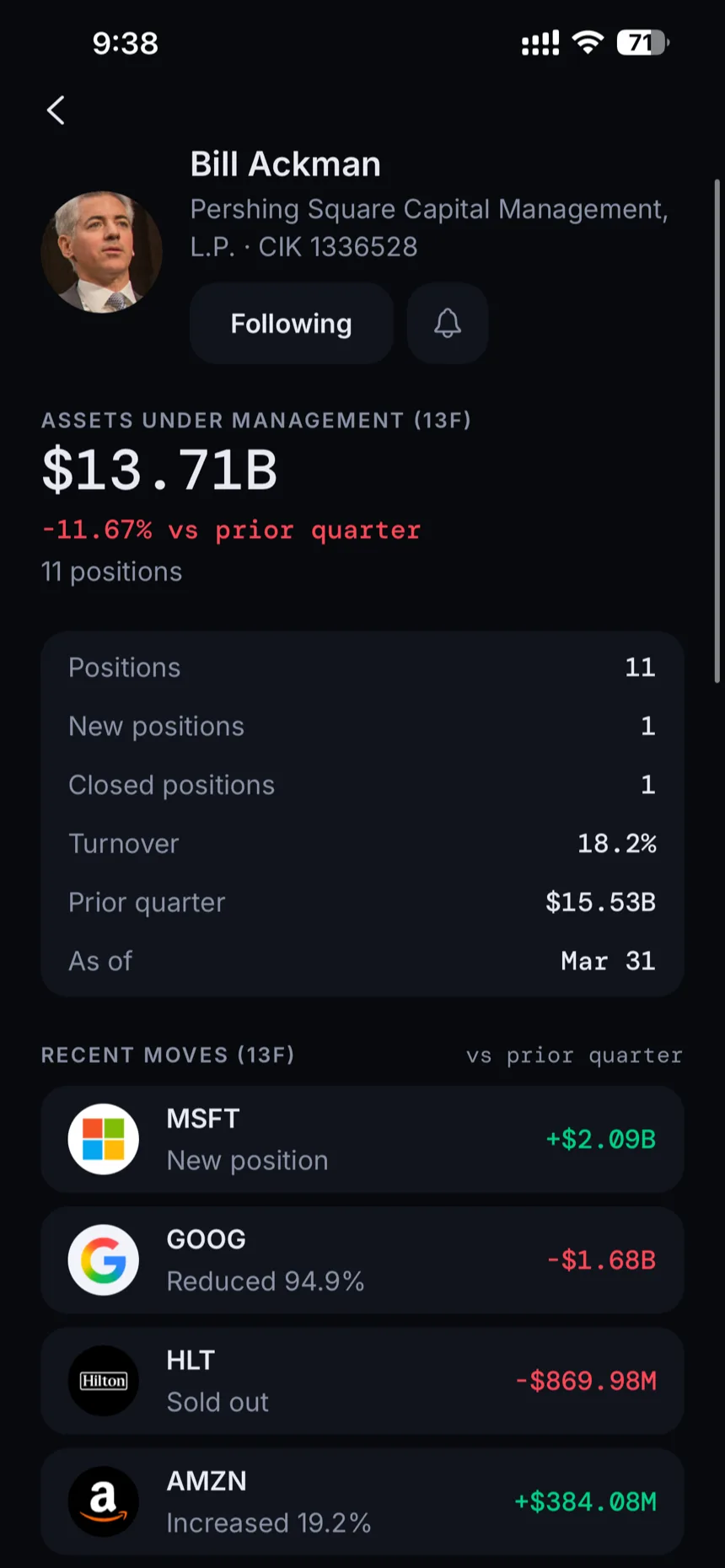
Search for a fund in GetSignal and its profile pulls the paperwork into one view: assets under management, the full list of disclosed holdings, and how each position changed against the prior quarter. New buys, adds, trims, and full exits are laid out so the quarter over quarter story is obvious at a glance, because the change between two snapshots is usually more informative than either snapshot on its own.
The same data flows the other way, too. Every company profile in GetSignal shows its top 13F holders next to the price chart, financials, analyst ratings, and insider activity, so when you are researching a stock you can see which large institutions held it last quarter and how their positions moved. One tap takes you from a company to the funds that hold it, or from a fund to any company in its book.
Follow the fund, or follow its top holdings
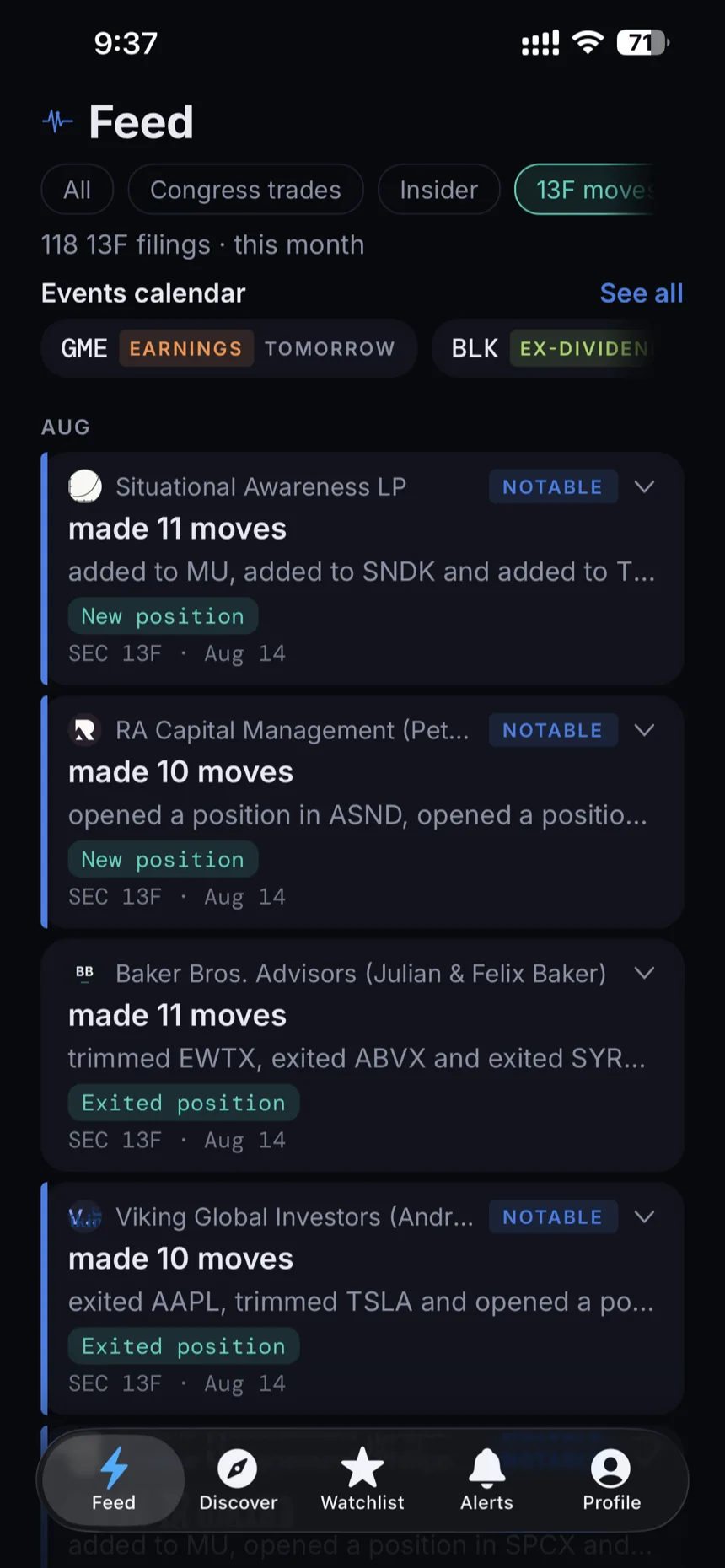
There are two ways to use a 13F tracker, and they answer different questions. Following a fund alerts you on the fund's own cadence: a burst of updates each quarter when 13Fs land: the new buys, the adds and trims, and the positions they exited. It is the right choice when you care about a specific manager's book.
Following the fund's top holdings instead subscribes you to the companies themselves: earnings reports, insider trades, analyst moves, and the filings of every other institution in the stock. That is the right choice when the fund led you to an idea and you now want to watch the company directly. Many people do both, and the same follow model extends to members of Congress. The free plan includes 10 follows; Signal Pro removes the cap. Details are on the pricing section.
13F tracking, wired into the rest of the app
GetSignal is not a quarterly spreadsheet dump. Fund filings land in the same feed and alert system as everything else you follow.
- Follow any fund and get a push when its next filing lands
- Fund profiles with AUM, holdings, and quarter over quarter changes
- Top 13F holders on every company profile
- Alert rules with event types, an importance floor, quiet hours, and daily caps
- Up to 20 alert rules on Pro, each with its own settings
- Every filing links back to SEC EDGAR
Frequently asked questions
What is a 13F filing?
Form 13F is a quarterly report that institutional investment managers file with the SEC, disclosing the US listed equity positions they manage. It is due 45 days after the end of each quarter, so the holdings it lists are a snapshot of the quarter that just closed, not a live portfolio.
How current is 13F data?
A 13F reflects holdings as of the last day of the previous quarter, and funds have up to 45 days after that to file. A fund may have changed positions since. GetSignal is upfront about this: the methodology screen in the app explains the lag, every holding is dated to its reporting period, and each filing links back to SEC EDGAR.
What is the difference between a 13D and a 13G?
Both are triggered when an investor crosses 5% of a company. Schedule 13D is due within 5 business days and signals possible active intent, the form activists file. Schedule 13G is the shorter form for passive investors who have no plans to influence the company.
Can I get an alert when a fund files?
Yes. Follow a fund in GetSignal and you get a push when its next filing lands. Alert rules let you pick event types, set an importance floor from Routine up to Major, add quiet hours, and cap pushes per day. Pro raises the rule ceiling from one to 20, so a fund can carry its own settings.
Is the 13F tracker free?
Yes. The free plan includes 10 follows across companies, funds, and members of Congress, per-event push alerts, and 30 days of history. Signal Pro adds unlimited follows and full history for $14.99 a month or $119.99 a year, with a 7 day free trial.
Know what the big funds disclosed
Free to start. The Pro trial runs through the App Store or Google Play and becomes a paid subscription unless you cancel. Not investment advice.